Best Cat Carriers for Travel
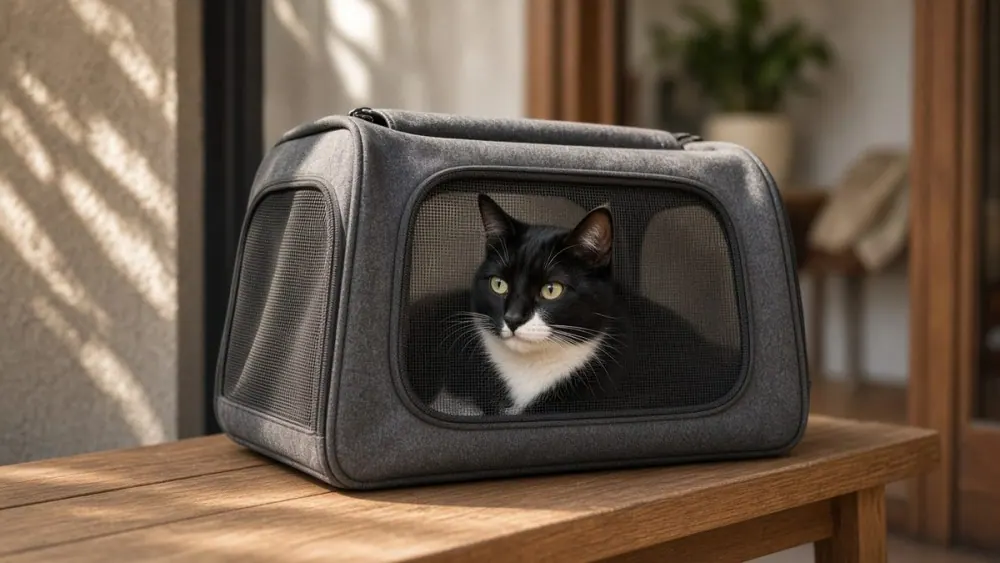
A good cat carrier is less about looking cute at the airport and more about one job: keeping the cat contained, ventilated, and reasonably secure on the way to the vet, into a car, or under an airplane seat. Soft-sided bags are easier to slide under a seat. Hard plastic kennels are easier to wipe down after a messy vet visit and are the usual choice for cargo-hold rules. “Airline approved” on a product page is not a boarding pass. Each airline publishes its own under-seat size and weight limits, and the gate agent, not the Amazon listing, has the final say.
A good carrier pairs well with a book about teaching cats to accept handling and travel. See The Trainable Cat and other gifts for cat lovers if you are shopping for the person, not just the cat.
For general feline health context, the Merck Veterinary Manual cat-owner pages are a reliable starting point, and your veterinarian should guide individual decisions.
This shortlist compares four in-stock carriers that cover different trips: a crash-tested soft carrier for cats up to 18 pounds, a mid-size Sherpa bag with a spring frame, a budget Amazon Basics bag for cats up to 16 pounds, and a hard-sided Petmate kennel aimed at pets up to 15 pounds. We are not crash-testing these ourselves. We are comparing current listings, published sizes, and what the makers actually claim about safety and airline fit.
As an Amazon Associate, we earn from qualifying purchases.
Quick picks
- Best for frequent car travel, with cabin flexibility: Sleepypod Air, olive green — a 22-by-10.5-by-10.5-inch soft carrier for cats up to 18 pounds that compresses to 16 or 19 inches for boarding and includes seatbelt straps. The listing describes it as crash-tested and certified by the Center for Pet Safety.
- Best mid-price soft carrier: Sherpa Original, Large, charcoal — a 19-by-11.5-by-11.8-inch bag with a spring wire frame, top and side doors, locking zippers, and a 22-pound maximum weight recommendation. The frame can compress a few inches to help it sit under a seat.
- Best budget soft carrier: Amazon Basics soft-sided carrier, 16.5-inch — a simple mesh bag for pets up to 16 pounds, with front and top zippers, a washable fleece pad, and a shoulder strap. The listing says it conforms to under-seat dimensions of most airlines; still check your airline.
- Best hard-sided kennel for vet visits and cargo rules: Petmate Two-Door kennel, 24-inch, blue — top- and front-loading plastic with steel-door latches, made for pets up to 15 pounds. The listing talks about airline cargo specs, not under-seat cabin travel.
Comparison table
| Product | Best for | Size (listing) | Weight cap (listing) | Good to know |
|---|---|---|---|---|
| Sleepypod Air, olive | Car trips where published crash testing matters, plus many cabin flights | 22” L x 10.5” W x 10.5” H; compresses to 19” or 16” long | Cats up to 18 lb | Seatbelt straps on both sides. Listing describes CPS crash testing. Premium price. |
| Sherpa Original, Large | A structured soft bag for vet visits and many under-seat flights | 19” L x 11.5” W x 11.8” H, about 3.9 lb | 22 lb maximum recommendation | Spring frame, top and side entry, locking zippers, washable liner, seatbelt/luggage strap. Not crash-tested in the listing. |
| Amazon Basics, 16.5-inch | A low-cost soft carrier for a smaller cat | About 16.5” L x 11” W x 11” H | 16 lb recommended max; size up if the cat is heavy | Mesh panels, front and top openings, washable pad. “Most airlines” is not a guarantee. |
| Petmate Two-Door, 24-inch | A wipe-clean hard kennel for the car, the vet, or cargo rules | 24.1” L x 16.8” W x 14.5” H | Pets 0–15 lb | Top and front doors, steel latches, stay-dry moat. Too large for a typical under-seat cabin space. |
Always measure the cat as well as the bag: length from the base of the neck to the base of the tail, and height from the floor to the top of the shoulders, then compare those numbers to the interior, not just the pretty exterior photo. If the cat cannot stand, turn, and lie down, go up a size, or pick a different style.
How to choose a cat carrier
Start with the trip you take most often. For a car ride to the clinic, a hard-sided kennel is easy to brace on a seat or floor, easy to disinfect, and harder for a determined cat to chew through. For a flight in the cabin, you usually need a soft-sided carrier that can compress into the published under-seat space. Those two jobs are not the same, which is why a 24-inch hard kennel and a 16.5-inch mesh bag can both be “right” for different households.
Read the weight cap and the dimensions together. The Petmate 24-inch kennel looks roomy, but the listing rates it for pets up to 15 pounds. The Sherpa Large is physically shorter and has a 22-pound recommendation. A large-breed cat may need a bigger, heavier carrier than anything in this shortlist.
Treat airline language carefully. “Airline approved” or “conforms to most airlines” usually means the bag is built around common under-seat sizes or cargo-hold rules. It does not reserve a spot in the cabin, and it does not override a carrier that is too tall once the cat is inside. Check the current airline page, measure the carrier with the cat in it if you can, and book a pet reservation if the airline requires one. Sherpa also markets a separate Guaranteed On Board program on some sizes; do not assume the Large size in this guide is covered without reading Sherpa’s current terms.
For car safety, look for a way to seatbelt the carrier and, when it is available, independent crash-test information tied to a published weight limit. Among these four, only the Sleepypod Air listing describes Center for Pet Safety crash testing. A seatbelt pass-through on a soft bag, including the Sherpa, is still useful for keeping the carrier from flying forward, but it is not the same as a crash-test certification. Never let a cat ride loose in a car.
Practice at home. Leave the carrier out with a familiar blanket, feed treats near the door, and take short indoor “trips” before the vet appointment. A frightened first loading is harder on everyone than a carrier the cat already knows. A sedative or calming product for travel is a veterinarian conversation, not a product-page decision.
1. Best crash-tested soft carrier: Sleepypod Air (olive green)
The Sleepypod Air is the premium pick in this group, and the price reflects that. The listing puts the exterior at 22 by 10.5 by 10.5 inches and says it can compress to 19 or 16 inches in length for boarding, then expand again once you are in the air. It is rated for cats up to 18 pounds. Seatbelt straps on both sides let you wrap a car belt around the carrier, and the listing describes crash testing and certification by the Center for Pet Safety. Washable bedding and a luggage-trolley pocket are part of the design, in ballistic-style nylon with mesh windows.
This is the carrier to consider if you drive with your cat often and want published crash-test information, or if you fly enough that a compressible 22-inch bag is worth the cost. Install it the way the maker describes, and stay inside the 18-pound cap. Crash testing is not a promise that every accident will have the same result, and airline fit still depends on that specific aircraft’s under-seat space.
It is a lot of money for a once-a-year vet trip. If that is your only use, one of the less expensive bags below is a more practical place to start.
2. Best mid-price soft carrier: Sherpa Original, Large (charcoal)
The Sherpa Original Large is a 19-by-11.5-by-11.8-inch soft carrier with a patented spring wire frame that can be pressed down several inches to help it fit under a seat. The listing recommends a 22-pound maximum, and it includes top and side entry, locking zippers, mesh panels, a padded handle, a detachable shoulder strap, a storage pocket, a seatbelt/luggage strap, and a removable washable liner. The current Large charcoal model was in stock when we checked.
This is a sensible everyday bag for a cat that is too heavy or too long for the 16.5-inch Amazon Basics carrier, and for people who want more structure than a floppy mesh tote. The frame helps the bag hold its shape under a seat. It is not described as crash-tested. Use the seatbelt strap in the car, and still confirm under-seat height with your airline. Watch the zippers on a cat that paws at mesh.
Do not assume a warranty or on-board guarantee from a different Sherpa size applies to this Large bag. Read the current program rules if that perk is part of why you are buying the brand.
3. Best budget soft carrier: Amazon Basics 16.5-inch mesh carrier
The Amazon Basics 16.5-inch carrier is the inexpensive option: a black soft bag, about 16.5 by 11 by 11 inches, with mesh ventilation, front and top openings, two top handles, an adjustable shoulder strap, and a removable fleece pad you can machine-wash. The recommended maximum load is 16 pounds, and the listing tells you to size up if the animal is heavy and to measure length and height before you buy. It also says the bag conforms to under-seat dimensions of most airlines.
That last phrase is useful as a starting point, not as a ticket. A 16.5-inch bag will fit more under-seat spaces than a 22-inch bag that does not compress, but the carrier can still be too tall once the pad and the cat are inside. For a small or midsize cat under 16 pounds, this is a reasonable first carrier. For a long-bodied or heavy cat, skip it and look at the Sherpa or a larger size on the same Amazon Basics page (this link is the 16.5-inch size).
Wash the bag in cool water with mild detergent and line-dry it, as the listing directs, then reshape it. Soft budget carriers can slump if they stay damp or get overstuffed.
4. Best hard-sided kennel: Petmate Two-Door, 24-inch (blue)
The Petmate 24-inch two-door kennel is a different tool. The plastic shell measures 24.1 by 16.8 by 14.5 inches, with a top-loading door and a front door, steel-door latches, a foldable handle, ventilation holes, and a stay-dry moat that is meant to route fluids away from the pet. The listing rates this size for small pets from 0 to 15 pounds and says the kennel meets most airline cargo specifications. It was in stock from Amazon when we checked.
This is a strong everyday vet-and-car kennel if your cat is within the 15-pound cap and you want something you can rinse, disinfect, and close with a latch instead of a zipper. Top loading is often easier than shoving a scared cat through a front door. It is not an under-seat cabin bag. A 24-inch hard kennel will not hide under a typical passenger seat, and “airline approved” here is about cargo-hold specs. If you need to fly the cat in the hold, confirm the airline’s current crate rules, including fastener type and labeling, rather than relying on a product-page phrase.
The 15-pound limit is easy to miss because the kennel looks large. If your cat is over that weight, buy a larger kennel with a printed cap that fits, not this 24-inch model.
Using the carrier in a car, at the vet, and on a plane
In a car, place the carrier where it cannot slide, ideally belted on a rear seat or otherwise secured as the maker describes. Do not put a hard kennel on the dashboard or in the front of an airbag. Offer water at stops on a long drive, and do not leave a cat in a parked car.
At the clinic, keep the carrier closed until the staff asks you to open it, and use the top door if you have one. A towel over part of the mesh can reduce visual stress for some cats; leave enough ventilation. After a visit, wipe hard plastic with a pet-safe cleaner, and wash soft liners.
For a flight, start with the airline’s current pet policy, the cabin versus cargo decision, and the exact under-seat measurements. Bring a photo of the carrier dimensions, arrive early, and have an alternative plan if the bag does not fit. A first flight is not the time to introduce a brand-new carrier. If you only need a short, supervised walk at the destination, that is a job for a cat walking harness, not a substitute for a carrier in the car or at the gate. Indoor cats, especially, do better with predictable routines, including a carrier they already know; see our overview of indoor cats vs outdoor cats.
If a dog is sharing the back seat instead of riding in a carrier, a seat cover protects the upholstery, not the dog. Our dog car seat covers guide covers bench and hammock styles.
For dogs that travel off-leash or hike, a GPS tracker is a complement to ID, not a replacement for it. See our GPS dog trackers guide.
FAQ
If you take one thing from this guide, let it be this: match the carrier to the trip and to the printed weight cap, then confirm airline measurements yourself. A crash-tested bag, a mid-price Sherpa, a $22 mesh carrier, and a hard kennel can all be the right buy, but only one of them will fit the travel you actually do.