Dog Licking Lips and Swallowing at Night: When to Call the Vet
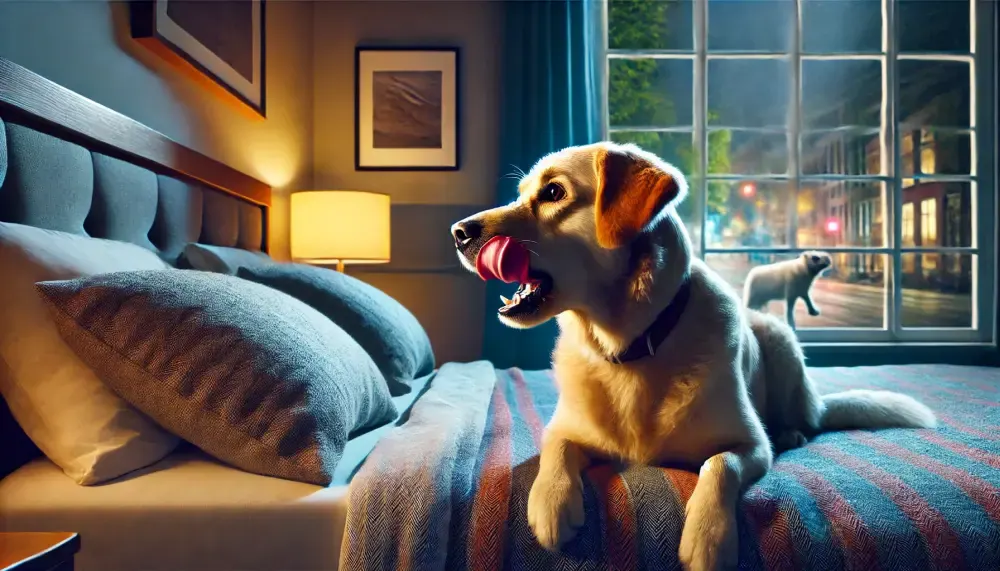
A dog that repeatedly licks their lips and swallows at night may be nauseated, uncomfortable, or in pain. Occasional licking after a meal can be ordinary. Persistent nighttime licking and swallowing is not a trick to ignore, especially if you also notice drooling, lip smacking, restlessness, a hunched posture, vomiting, or a change in appetite. Possible causes include an upset stomach, reflux, dental pain, nausea from a more serious illness, or, less often, something stuck in the mouth or throat. This is a reason to call your veterinarian, not a reason to start a home remedy.
For general pet-health questions, the AVMA pet-owner resources are a reliable starting point, and your veterinarian should guide individual decisions.
If anxiety is part of the picture, talk with your veterinarian before you try calming treats; lip-licking alone is not a reason to medicate.
Do not add a new supplement, human antacid, or extra meal at night unless your veterinarian has told you to. Note when it happens, what the dog ate, and any other signs, and get an exam if the behavior lasts more than a brief episode or the dog seems unwell.
If your dog keeps licking his lips and swallowing at night, it can be concerning, especially if the behavior persists over time. This habit could be a result of various factors, ranging from simple discomfort to more complex health conditions. Understanding the root cause is essential to provide relief to your furry friend and ensure their comfort during sleep. In this article, we’ll explore the common reasons why dogs might exhibit this behavior at night and what steps you can take to address it.
Common Causes of Dog Lip Licking and Swallowing at Night
Several factors can contribute to your dog’s nighttime licking and swallowing behavior. Here are some of the most common reasons:
1. Gastrointestinal Issues
Dogs with stomach discomfort or acid reflux might experience nausea, which can lead to lip licking and swallowing. Acid reflux, in particular, can be more noticeable at night when your dog is lying down, as this position allows stomach acid to flow more easily into the esophagus. If your dog often licks their lips and swallows at night, it might be a sign of digestive discomfort.
How to Help:
- If you suspect gastrointestinal issues, consult your vet. They may recommend dietary changes or medications to reduce acid reflux.
- Consider feeding your dog smaller, more frequent meals throughout the day, and avoid feeding them just before bedtime.
2. Dental or Oral Problems
Oral discomfort, such as dental disease, infections, or mouth ulcers, can cause dogs to lick their lips and swallow more frequently, especially at night when they’re trying to rest. Plaque buildup, gingivitis, or broken teeth might be causing discomfort that prompts your dog to lick their lips in an attempt to soothe the irritation.
How to Help:
- Regular dental checkups are essential for maintaining your dog’s oral health. If you notice bad breath, excessive drooling, or reluctance to eat, it may indicate a dental issue.
- Brushing your dog’s teeth regularly and providing dental chews can help prevent oral problems.
3. Anxiety or Stress
Dogs, like humans, can experience anxiety or stress that leads to restless behavior. Lip licking and swallowing are common signs of anxiety in dogs. Nighttime might trigger anxiety due to environmental factors, such as strange noises, changes in routine, or even separation anxiety if your dog sleeps alone.
How to Help:
- Creating a calming bedtime routine for your dog can help reduce nighttime anxiety. This might include providing a comfortable bed, a quiet environment, and perhaps some calming scents or sounds.
- If your dog suffers from separation anxiety, gradually training them to be comfortable alone or using a comfort item like a favorite toy can help ease their stress.
4. Dehydration
Dehydration can make a dog feel thirsty, which might cause them to lick their lips and swallow more frequently. If your dog hasn’t had enough water during the day, they might display this behavior as their body signals for more hydration. It’s particularly important to monitor hydration levels in hot weather or after exercise.
How to Help:
- Make sure your dog has access to fresh, clean water throughout the day, and encourage them to drink more, especially before bedtime.
- If your dog isn’t drinking enough water, adding a small amount of low-sodium broth to their water bowl might entice them to drink more.
5. Foreign Objects in the Mouth or Throat
If a dog has something stuck in their mouth or throat, they may repeatedly lick their lips and swallow in an attempt to dislodge it. This could happen after eating or chewing on toys or sticks. It’s especially important to watch for this behavior if it comes on suddenly.
How to Help:
- Check your dog’s mouth for any signs of a foreign object. If you see something lodged, do not attempt to remove it yourself unless it’s safe to do so, as this could cause injury. Consult a veterinarian for further assistance.
6. Allergies
Allergies can cause discomfort in a dog’s mouth, throat, or stomach, leading to lip licking and swallowing. Food allergies or environmental allergens, such as pollen or dust, can trigger these symptoms, particularly at night when your dog is trying to settle down.
How to Help:
- Consult with your vet to identify potential allergens and discuss treatment options. This could include dietary changes or allergy medications.
- Regular cleaning of your dog’s bedding and surrounding environment can help reduce exposure to allergens.
When to See a Vet
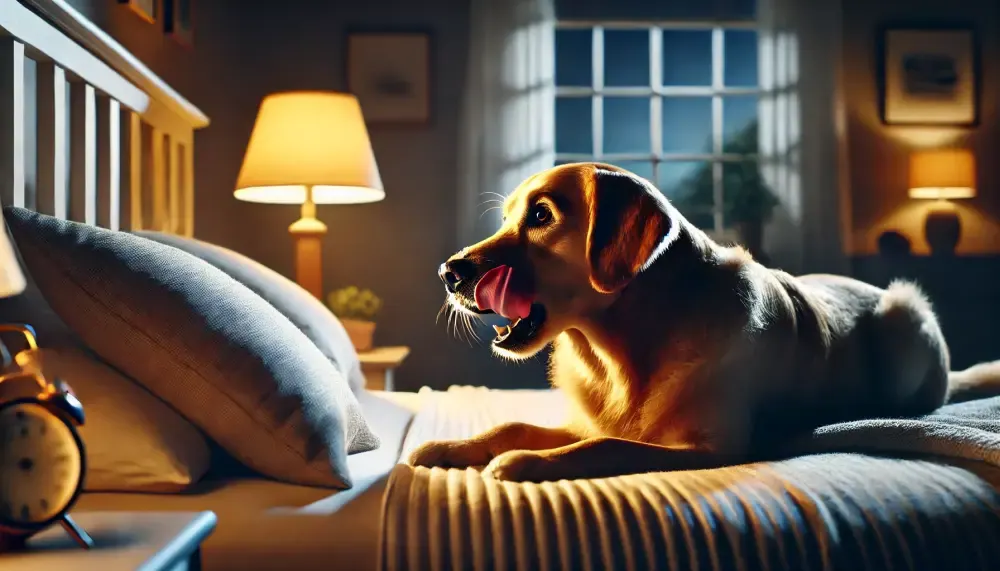
While occasional lip licking and swallowing at night might not be cause for concern, persistent behavior could indicate an underlying health issue that needs attention. You should seek veterinary care if:
- Your dog’s behavior becomes more frequent or intense.
- There are additional symptoms, such as vomiting, diarrhea, or coughing.
- Your dog shows signs of discomfort or pain during the day.
- There is excessive drooling or difficulty swallowing.
A veterinarian will perform a thorough examination and may recommend diagnostic tests such as bloodwork, X-rays, or an endoscopy to determine the root cause of the problem.
Your dog’s nighttime behavior of licking lips and swallowing could be due to a variety of causes, ranging from mild issues like dehydration to more serious health concerns like gastrointestinal problems or allergies. Understanding the potential reasons for this behavior and consulting with your veterinarian are crucial steps to ensuring your dog’s comfort and well-being. By paying close attention to your dog’s habits and health, you can help them get the restful sleep they need and maintain a happy, healthy life.