Why Are Cats Afraid of Cucumbers? Exploring the Viral Phenomenon
For general feline health context, the Merck Veterinary Manual cat-owner pages are a reliable starting point, and your veterinarian should guide individual decisions.
The internet has been fascinated with videos of cats reacting in horror to cucumbers. It seems odd, but there’s something about this harmless vegetable that sends our feline friends into a panic. In this article, we’ll explore why cats are afraid of cucumbers, what it reveals about their behavior, and whether it’s something cat owners should be concerned about.
Cats and Cucumbers: The Viral Trend Explained
Social media has popularized countless trends, but the phenomenon of cats leaping into the air at the sight of a cucumber has truly taken the internet by storm. It’s entertaining to watch, yet puzzling to understand. How can such an everyday object cause such an intense reaction?
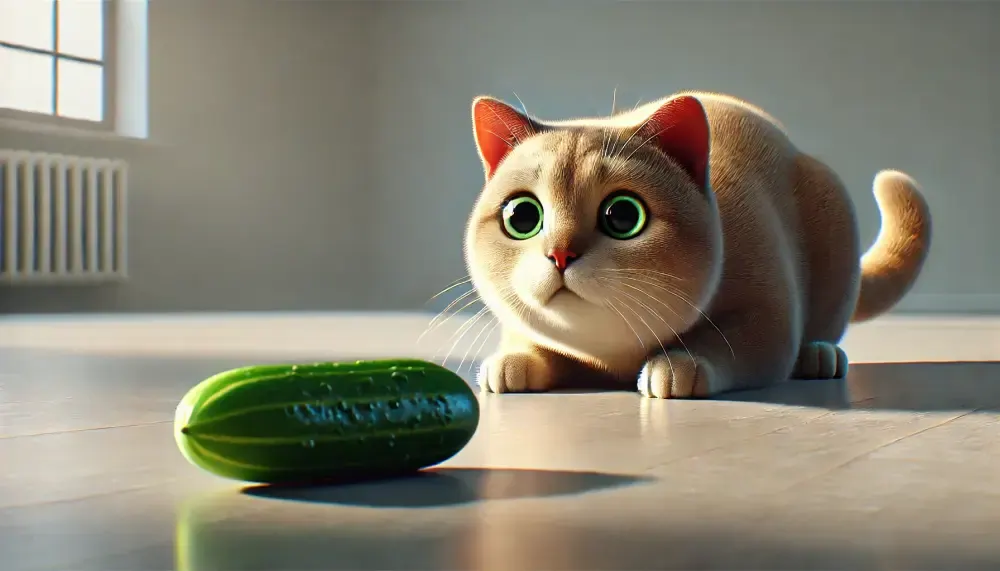
In these videos, the unsuspecting cat is typically eating or distracted, and a cucumber is quietly placed behind it. When the cat turns around and spots the cucumber, it often responds by leaping away, hissing, or displaying signs of aggression. It’s as if the cucumber represents a major threat, but is there more to this reaction?
https://www.youtube.com/watch?v=RBrZsgy4-SQ&pp=ygUSQ2F0cyBhbmQgQ3VjdW1iZXJz
Reasons Behind the Reaction
Cats are highly sensitive animals, instinctually wired to respond to sudden changes in their environment. Here are some potential explanations for why cucumbers, of all things, could trigger such strong reactions:
- Surprise Factor
Cats are creatures of habit and enjoy predictable environments. When they turn around and find a cucumber unexpectedly close, it startles them. The sudden appearance of an unfamiliar object can trigger an automatic fight-or-flight response, an evolutionary trait that helps cats avoid predators. - Snake-Like Shape
Some experts believe that cats may mistake cucumbers for snakes, one of their natural predators. The elongated, green shape of the cucumber might resemble a snake, and this visual similarity could prompt a cat’s innate reaction to avoid or escape from perceived danger. In the wild, even a split-second reaction to a snake can mean the difference between survival and harm, so cats are primed to err on the side of caution. - Violation of Personal Space
Cats are known to be territorial, especially in areas where they eat and rest. A cucumber placed behind them without their awareness may seem like an intrusion. As a result, cats might react defensively, interpreting the cucumber as an unexpected and unwelcome presence in their personal space.
What This Reaction Tells Us About Cat Behavior
These reactions reveal much about the nature of feline behavior and their survival instincts. Cats have evolved to be vigilant and alert, which explains their rapid responses to sudden stimuli. The cucumber incidents highlight the following aspects of a cat’s behavior:
- Heightened Sense of Awareness
Cats are always on alert, even when they appear relaxed. Their highly tuned senses enable them to notice small movements and subtle changes around them. When something as foreign as a cucumber appears in their peripheral vision, their immediate reaction is a testament to this alertness. - Rapid Reflexes
One reason cats survive well in the wild is their ability to respond quickly to threats. Whether it’s a real snake or simply a cucumber, a cat’s reflexes help them jump away swiftly from any potential danger. It’s not uncommon for cats to leap or run in reaction to sudden appearances, even if it’s harmless. - Understanding of Territory
As territorial animals, cats value their space and feel uneasy about any perceived invasion. When they find an object like a cucumber placed unexpectedly close, they might react as they would to an intruder, resulting in the dramatic responses seen in viral videos.
Should You Try This at Home?
While it might be tempting to test your cat’s reaction to a cucumber, it’s worth considering the impact on their well-being. These videos can be amusing, but for the cat, the experience is genuinely startling and potentially stressful. Frequent exposure to sudden scares could cause anxiety or mistrust in an otherwise secure environment.
- Potential Stress on Cats
Prolonged or frequent scares could lead to stress-related behavior in cats, such as excessive grooming, hiding, or changes in eating habits. For cats, feeling safe in their environment is essential, and repeated disruptions of that sense of safety may harm their mental health. - Respecting Boundaries
Cats thrive in environments where they feel respected and secure. As pet owners, understanding and respecting these boundaries is key to maintaining a healthy and trusting relationship with our cats. It’s always best to engage in activities that build confidence rather than cause fear.
The Science of Startle Reflex in Cats
The startle reflex is an involuntary response that is common among most animals, including cats. In cats, the startle reflex is especially strong due to their evolutionary background as both predators and prey. This reflex enables them to react instantly to sudden threats or changes in their surroundings.
Studies have shown that cats’ brains are wired to prioritize sudden movements, particularly from behind, as potential threats. This is why a cucumber, when placed behind them unexpectedly, can evoke a dramatic reaction. When the cucumber enters their field of vision, their brain processes it as a possible danger, causing an immediate, instinctive response.
Other Objects That Might Startle Cats
While cucumbers are the most well-known “cat startlers” on the internet, other objects can provoke similar responses. Anything unfamiliar or placed sneakily within a cat’s personal space may trigger a similar reaction. Here are some other common triggers:
- Balloons – The floating movement and texture of balloons can make them alarming to some cats.
- Plastic Bags – The noise and shifting of a plastic bag can catch a cat off guard.
- Vacuum Cleaners – The sudden movement and noise are often perceived as threats, causing cats to run for cover.
The cucumber phenomenon showcases the complex and sensitive nature of feline behavior. Although these videos may seem funny, they underscore the importance of understanding why cats react as they do. Recognizing that these reactions stem from instinct rather than conscious fear can help us better support our cats’ needs.
Understanding and respecting our pets’ instincts and boundaries contributes to a happier, healthier environment for them. While cucumbers might seem harmless, it’s best to avoid intentionally scaring our furry friends and focus on building trust and comfort in their lives. After all, a relaxed and happy cat makes for a happier home.