Best Cat Trees for Indoor Cats
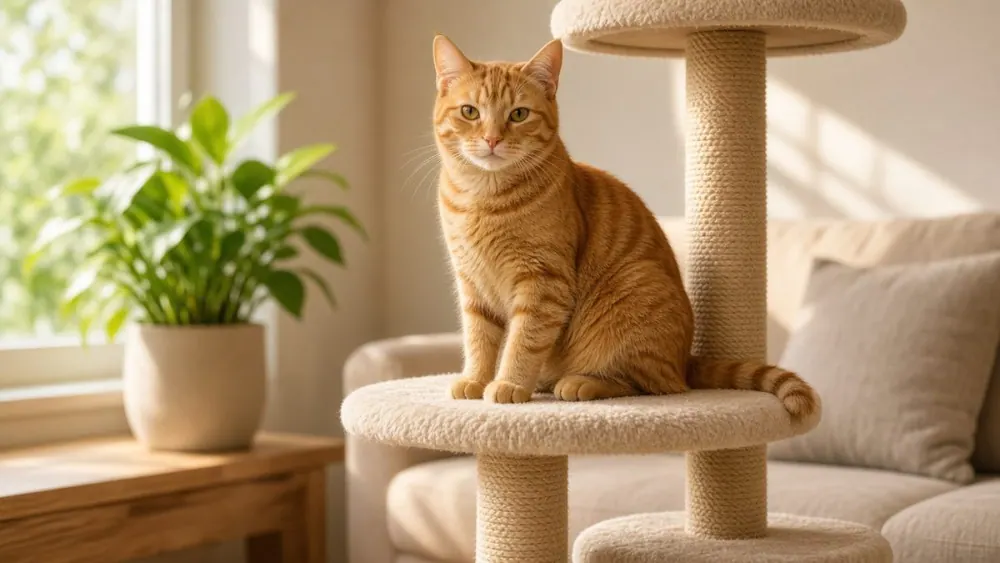
A cat tree gives an indoor cat something they do not get from a sofa: vertical territory. Most household cats like to climb, scratch, nap in a slightly hidden spot, and watch the room from a perch. A well-chosen tree can cover those jobs in one footprint. It will not automatically save your furniture, and it is not a treatment for stress or behavior problems, but it is one of the more practical pieces of indoor enrichment you can buy.
A mid-size cat tree also appears as a practical Christmas gift in our Christmas gifts for cats guide, alongside scratchers, perches, and holiday safety notes.
For general feline health context, the Merck Veterinary Manual cat-owner pages are a reliable starting point, and your veterinarian should guide individual decisions.
This shortlist compares four in-stock trees that solve different space problems: a 66-inch all-in-one tower, a widely available 46-inch Amazon Basics tree, a 45-inch Feandrea condo with a roomy cave, and a slim floor-to-ceiling cactus tree. We are not lab-testing these in a living room. We are comparing current listings, published sizes, and the weight limits the makers actually print.
If your cat is strictly indoor, a tree also helps replace some of the climbing they would do outside. Our guide to indoor cats vs outdoor cats covers that trade-off. A cat window perch can add a sunny lookout without taking extra floor space. Scratching on the posts is normal; the reasons are in our article on why cats scratch.
As an Amazon Associate, we earn from qualifying purchases.
Quick picks
- Best tall all-in-one: Feandrea 66.1-inch cat tree, smoky gray — five levels, two perches, two caves, a hammock, and an anti-tip kit. The maker rates it for cats up to 11 pounds each, so check your cat’s weight before you buy the extra height.
- Best widely available mid-height tree: Amazon Basics cat tree, 45.9-inch Large, beige — a compact 17.7-inch square footprint, seven jute scratching posts, and carpeted platforms. It is a straightforward apartment tree sold and shipped by Amazon.
- Best compact condo with a cave: Feandrea 45.3-inch cat tree, light gray — two padded perches, a 13.8-inch-wide cave, a sisal ramp, and an anti-tip kit. The listing allows up to 15.4 pounds per cat, which is more generous than the taller Feandrea on this list.
- Best floor-to-ceiling space-saver: PAWZ Road cactus tree, 95–108 inches — a skinny tension-rod tower with five platforms and a hammock. The maker recommends it for kittens and small to medium cats, not heavy adults.
Comparison table
| Product | Best for | Size (listing) | What you get | Weight guidance (maker) |
|---|---|---|---|---|
| Feandrea 66.1-inch, smoky gray | A tall, multi-level tree in a modest footprint | 21.7” L x 17.7” W x 66.1” H | 5 levels, 2 perches, 2 caves, hammock, basket, anti-tip kit, many sisal scratch zones | Up to 6 cats, max 11 lb each |
| Amazon Basics 45.9-inch Large | A simple mid-height tree that is easy to find | 17.72” L x 17.72” W x about 45.9” H, about 24 lb | Tiered carpeted platforms and 7 jute scratching posts | Listing recommends it for large breeds; no numbered per-cat cap was printed on the page we checked |
| Feandrea 45.3-inch, light gray | A smaller condo with a real hideaway | 19.7” L x 13.8” W x 45.3” H | 2 padded perches, a 13.8” x 13.8” x 11” cave, sisal posts, scratching ramp, anti-tip kit | Up to 3 cats, max 15.4 lb each; listing also notes a 110 lb total static load |
| PAWZ Road cactus, 95–108 inches | Vertical space when floor space is tight | About 17.3” x 9.5” footprint; height adjusts 95–108” | 5 platforms, hammock, sisal-covered post, tension rod (no drilling) | Recommended for kittens and small to medium cats |
Prices, stock, and even the included anti-tip hardware can change. Confirm the current size, color, and weight limit on the listing before you buy, especially if you have a large-breed cat such as a Maine Coon or a chunky domestic cat over the printed cap.
How to choose a cat tree for an indoor cat
Start with height and access, not with how the tree looks in a photo. Many cats like a high lookout, but a 66-inch tower is a poor fit if your cat is older, hesitant to jump, or lives under low ceilings and ceiling fans. A mid-40-inch tree with a ramp is often easier to live with. Floor-to-ceiling designs add height without a wide base, but only if your ceiling falls in the adjustment range and the tension rod sits tight.
Next, read the weight limit. Feandrea’s 66-inch model is explicit: up to 11 pounds per cat. The 45.3-inch Feandrea allows 15.4 pounds per cat. The cactus tree is described for small to medium cats, not for a 20-pound adult. If your cat is already at or above the cap, buy a heavier, wider tree rated for large cats.
Stability is the other non-negotiable. Look for a wide enough base, a tree that is not top-heavy, and an anti-tip kit you will actually install. Tighten a tension-rod tree so it cannot tilt when a cat launches from a platform, and set it on a level floor rather than a thick rug. If it wobbles after assembly, tighten the posts and use the wall strap before you let the cat up.
Scratching surfaces should be sisal or tightly wrapped jute, not loose carpet that invites claw snags and teaches the cat that carpeted furniture is fair game. A separate, sturdy scratching post is still worth having if your cat prefers a vertical stretch away from the tree; cats scratch to mark territory, stretch, and maintain claws, which we walk through in why cats scratch. For a dedicated post, see our best scratching posts for cats.
Finally, think about the layout, not just the height. Multi-cat homes need more than one good surface so cats are not forced to share a single perch, and a cave gives a shy cat a place to duck out of sight. Take dangling pompoms off if your cat chews string. After climbing time, a wand or puzzle toy is a better finish than loose strings on the tree; see our shortlist of best toys for cats on Amazon.
1. Best tall all-in-one: Feandrea 66.1-inch cat tree (smoky gray)
The Feandrea 66.1-inch tree is the tallest conventional tower in this group. The listing describes five levels with a fairly short 10- to 12-inch gap between them, two padded perches, two caves, a hammock, a basket, and plush balls, plus an anti-tip kit. The footprint is 21.7 by 17.7 inches, still apartment-friendly for a tree this tall, and sisal covers many of the posts plus a scratch ramp that also works as a ladder.
The important caveat is the weight rating: the maker says it is stable for up to six cats, with a maximum of 11 pounds each. That rules out many large-breed and overweight household cats. If your cat is over that number, this is the wrong tree. For cats within the cap that already climb well, the mix of high perches and caves is a solid one-piece setup for a single cat or a pair of lighter cats.
Assembly is described as block-like, with labeled parts and a reinforced particleboard base. Use the anti-tip kit: a 66-inch tree with a cat on the top perch has a high center of gravity, and no listing rating replaces a wall strap on a slick floor.
2. Best widely available mid-height tree: Amazon Basics 45.9-inch Large
The Amazon Basics Large cat tree is about 45.9 inches tall on a 17.72-inch square base and weighs about 24 pounds. The current Large size was in stock and sold by Amazon when we checked. The listing calls out tiered, carpeted platforms and seven jute scratching posts, a simpler layout than the Feandrea condos: platforms and posts, not a big enclosed cave.
This is a practical pick if you want a mid-height tree you can reorder easily, or if you do not need a 66-inch tower under a ceiling fan. The page lists a “large breeds” recommendation, but it does not print a numbered per-cat cap the way Feandrea does. Treat that as incomplete information, not as a promise that a 20-pound cat can launch from the top platform.
Carpeted platforms are comfortable for many cats and can be vacuumed, but they are also closer in texture to household carpet. If your cat already treats the sofa like a scratcher, pair this tree with a sisal post you can place right next to the furniture they like, and reward use of the post.
3. Best compact condo with a cave: Feandrea 45.3-inch cat tree (light gray)
The Feandrea 45.3-inch condo sits in the same height range as the Amazon Basics tree, but the layout is different. You get two padded top perches with raised edges, a cave the listing measures at 13.8 by 13.8 by 11 inches, four sisal posts, a scratching board that doubles as a ramp, and two pompoms. The footprint is 19.7 by 13.8 inches, so it is a little longer and narrower than the Amazon Basics square base. An anti-tip kit is included; use it.
The weight guidance is also different, and it is more useful for many adult cats: the maker says the tree is suitable for three cats, up to 15.4 pounds each, and lists a 110-pound total static load. That still is not a Maine-Coon-class rating, but it is a clearer and more generous cap than the 11-pound limit on Feandrea’s 66-inch model. The staircase-like layout and ramp are also easier for a cautious climber than a tree that only offers long jumps between levels.
Two notes from the listing are worth following: remove pompoms if the cat chews the toys or elastic, and repair or replace a torn cave so a paw or head cannot catch in the fabric.
4. Best floor-to-ceiling space-saver: PAWZ Road cactus tree (95–108 inches)
The PAWZ Road cactus tree is the odd one out, in a useful way. Instead of a wide particleboard base, it uses a tension rod and adjusts from 95 to 108 inches, so it can brace between floor and ceiling without drilling. The footprint is slim, about 17.3 by 9.5 inches. The listing describes five platforms, a hammock, dangling balls, and a post wrapped in sisal, with a thicker 3.5-inch post diameter than many skinny ceiling trees.
This is a good thought for a narrow corner or a room where a 22-inch-deep condo would block a walkway. It is not a good thought for a heavy adult cat. The maker recommends it for kittens and small to medium cats. A large cat on a narrow, tall column can make the whole rod flex, even when the tension is correct. Measure your ceiling height, including any crown molding, and confirm it falls inside the 95–108 inch range. The rod should be tight, on a firm floor, and checked again after the first week of use, because tension setups can loosen.
The cactus shape is mostly decoration. Cats will care more about whether the platforms are wide enough to sit on and whether the sisal is dense. If you also want a cave, pair this tree with a covered bed or one of the mid-height condos above.
Where to put the tree, and how to introduce it
Place the tree where your cat already likes to be: near a window, in the room they sleep in, or beside the furniture they already scratch. A tree hidden in a spare room will get less traffic. Leave clearance above a tall tower so a jumping cat does not hit a curtain rod, and keep a floor-to-ceiling model away from a ceiling fan.
Do not force the cat onto a new tree. Let them inspect it, rub a little used bedding on a perch, and play around the base with a wand toy. If you have two cats and one guards the only good perch, add a second sleeping surface rather than buying an even taller tree with one prime spot.
Anchor the tree on day one. Tighten every post, install the anti-tip strap into a stud or a sound wall anchor, and test the top perch with your hand before the cat does. Recheck screws after a week, then periodically as sisal wears and the structure settles.
Safety and wear
Replace or wrap posts when the sisal is shredded down to bare wood or loose loops that can catch a claw. Remove frayed hanging toys. A wobbly tree is a reason to stop using the top levels until it is tightened or replaced.
A tree is enrichment, not veterinary care. Sudden reluctance to jump, new irritability around other cats, or a cat that stops using high places may be pain or illness. Those changes deserve a vet visit, not a taller tower.
FAQ
If you take one thing from this guide, let it be this: match the tree to your cat’s weight and to the space you actually have, then anchor it. A slightly shorter condo that is rated for your cat and placed by a window will get more use than a tall, pretty tower that wobbles or exceeds the printed limit.