Best Dog Food for Labs (2026)
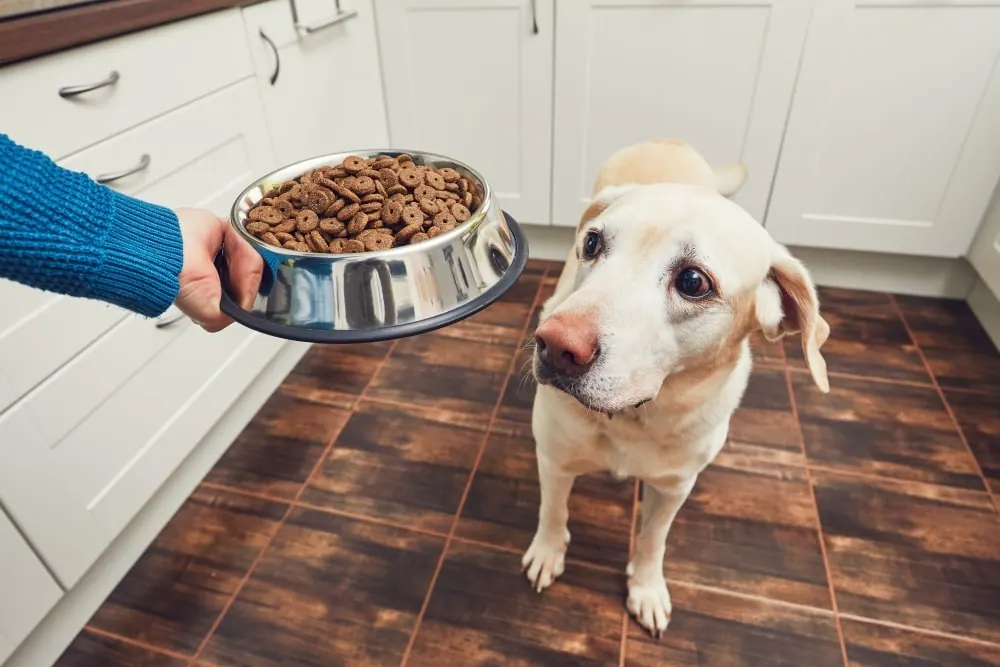
Labrador Retrievers are easy to overfeed. The feeding job is usually not “more protein” or a magic Lab-only nutrient; it is a complete food, a measured portion, and the discipline to keep a waist on a dog that will happily eat the crumbs off the floor. Labs are also prone to joint wear as they age, which is another reason to stay lean from the start.
Look for a complete-and-balanced statement as explained in the FDA guidance on complete and balanced pet food and AAFCO’s consumer guide to understanding pet food. The WSAVA Global Nutrition Guidelines are a useful higher-level reference when you are choosing a food.
Labs are a classic large-breed example of why growth diets should not be switched too early; we cover timing in when to transition large-breed puppies to adult food.
Large-breed and bully-breed puppies need a growth formula, not an adult bag; see our Pit bull puppy food guide if you are raising that type of puppy.
Pit bulls, like Labs, need a complete food and a healthy weight more than a trendy bag; see our Pit bull food guide if that is your dog.
Like Labs, Boxers do best on a complete food that fits their waistline; see our Boxer dog food guide if that is your breed.
As an Amazon Associate, we earn from qualifying purchases.
A breed-specific kibble can be convenient, especially if the shape slows a fast eater a little, but a standard large-breed adult food is also a respectable choice. For seniors, see best senior dog food. For puppies, use best dog food for puppies rather than an adult Lab bag. A measured spoonful of best canned dog food can help picky or gulp-prone dogs if you adjust the kibble down.
What Labs actually need
- A complete and balanced food for adult maintenance (or growth, if you have a puppy).
- Calories tight enough that you can feel ribs. The bag’s chart is often generous for a typical household Lab.
- Split meals and a slower eating setup if your dog inhales food. Do not rely on a kibble shape alone.
- Joint-support marketing (glucosamine, omega-3s) can be a bonus in some formulas; it does not replace weight control or veterinary care for lameness.
1. Royal Canin Labrador Retriever Adult
Royal Canin’s Labrador Retriever Adult formula is a breed-specific complete food for Labs about 15 months and older, with a doughnut-shaped kibble meant to slow fast eaters a bit and a calorie profile aimed at weight control. It is a convenient, widely sold option if your dog likes it and you can keep buying it. It is not required. Confirm the current bag’s life-stage statement and feeding guide, and still measure meals.
Check price on Amazon: Royal Canin Labrador Retriever Adult Dry Dog Food, 17 lb
2. Purina Pro Plan Large Breed wet food (as a mixer or meal)
If you want moisture or a little more aroma on the bowl, Pro Plan’s large-breed wet chicken formula (13 oz cans, 12-pack) is a complete food you can use as part of the day’s calories. It is not a free extra on top of a full cup of kibble. This is also a useful option for Labs that gulp dry food and do better when part of the meal is wet.
Check price on Amazon: Purina Pro Plan Large Breed Wet Dog Food in Gravy, Chicken, 12 x 13 oz
3. A straightforward complete kibble
Many Labs do perfectly well on a widely available adult food such as Purina Pro Plan Complete Essentials or Hill’s Science Diet Adult, covered in our top dog food brands guide. If your dog is already at a healthy weight on one of those, there is no need to “upgrade” to a breed bag. If your Lab is a senior or slowing down, switch your attention to best senior dog food rather than buying a denser performance food.
Check price on Amazon: Purina Pro Plan Complete Essentials Chicken & Rice Dry Dog Food, 35 lb
Treats, training, and the scale
Labs collect calories from training treats, leftover kibble, and dental chews. Put those into the day’s budget. best training treats and best dental sticks for dogs are useful, but they are not free.


