Best Dog Grooming Brushes
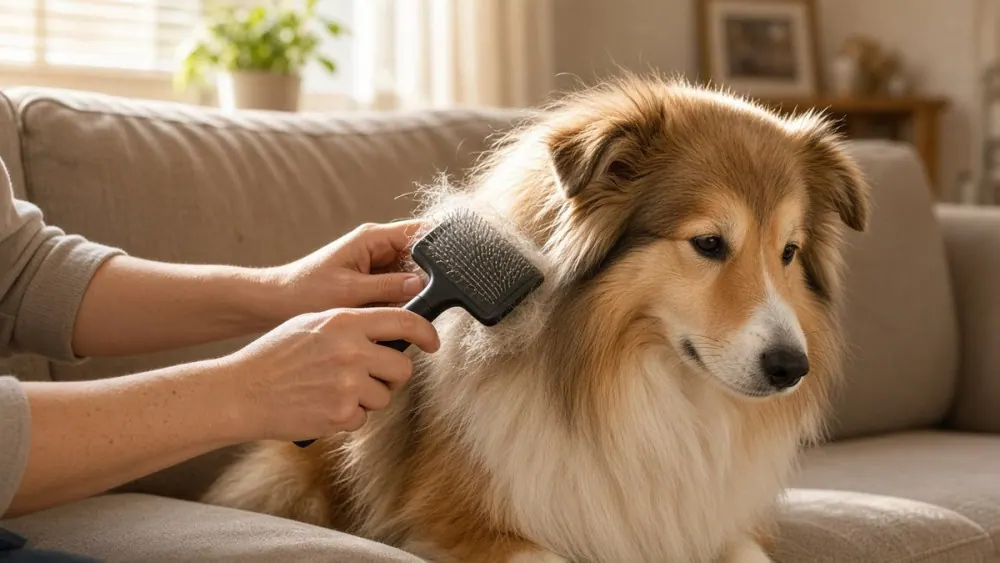
The right brush depends on the coat, not on a brand promise to end shedding forever. A slicker lifts tangles and loose topcoat. An undercoat tool reaches the soft layer underneath on double-coated dogs. Used gently, both make a coat more comfortable and keep some of that hair out of the sofa. Used with too much pressure, they can scratch skin or thin a coat. Brushing is not a treatment for allergies, fleas, or hair loss. For a calmer whole-body routine, see our dog grooming tips.
This shortlist compares four in-stock tools: a Hertzko self-cleaning slicker that works as an everyday brush, a FURminator undercoat tool for medium long-haired dogs, a FURminator for large short-haired dogs, and a FURminator for small long-haired dogs. We are comparing current listings and the makers’ size and coat guidance, not running a shed-season lab test. If dry, itchy skin is the real problem, a brush will not fix it; our article on dog conditioner for dry skin is a more relevant starting point, and a veterinarian should look at a sore or bald coat.
As an Amazon Associate, we earn from qualifying purchases.
Quick picks
- Best everyday slicker: Hertzko self-cleaning slicker brush — a retractable-bristle slicker sold for dogs and cats, with a push-button self-clean function. This is the gentle first brush for tangles and loose hair, not a deep undercoat tool.
- Best undercoat tool for medium long-haired dogs: FURminator undercoat tool, medium long hair — made for dogs from 25 to 50 pounds with long hair. The listing says it reaches through the topcoat to remove loose undercoat when used as directed, and it has a FURejector button to release collected hair.
- Best undercoat tool for large short-haired dogs: FURminator undercoat tool, large short hair — made for dogs over 50 pounds with short hair, with weekly-use guidance on the listing. Do not use this size on a small dog or a long-coated breed it was not made for.
- Best undercoat tool for small long-haired dogs: FURminator undercoat tool, small long hair — the small, long-hair version of the same tool, with a FURejector button and a curved edge. The brand’s “up to 90% less loose hair” language is a marketing claim, not a measurement we made.
Comparison table
| Product | Best for | Tool type | Size / coat (listing) | Good to know |
|---|---|---|---|---|
| Hertzko self-cleaning slicker | Everyday tangles and loose topcoat | Slicker with retractable bristles | Dogs and cats, long or short hair | Push-button self-clean; use light pressure |
| FURminator medium, long hair | A medium double-coated dog | Undercoat deshedding tool | 25–50 lb, long hair | Use as directed; FURejector button |
| FURminator large, short hair | A large, short-coated shedding dog | Undercoat deshedding tool | Over 50 lb, short hair | Listing says to use weekly |
| FURminator small, long hair | A small, long-coated shedding dog | Undercoat deshedding tool | Small dogs, long hair | “Up to 90%” is a brand claim |
How to choose a dog grooming brush
Match the tool to the coat. A single-coated dog, or a dog that mainly gets little tangles behind the ears, often needs only a slicker or a soft bristle brush. A double-coated breed that leaves a winter undercoat on the floor needs an undercoat tool in the right size and coat length, used sparingly. Buying the wrong FURminator size is a common mistake: the large short-hair tool is not a “stronger” version for a small long-haired dog.
Work in the direction of hair growth, keep sessions short, and stop at the first sign of redness. Mats tight to the skin are a scissors-or-groomer problem, not a “pull harder” problem. Nail care is a separate job; if you are also looking for a safer way to shorten nails, our nail grinders guide covers that without turning brushing into a full medical exam.
1. Best everyday slicker: Hertzko self-cleaning brush
The Hertzko self-cleaning slicker was in stock when we checked. The listing describes fine, angled bristles for long or short hair on dogs and cats, a comfort-grip handle, and a push-button retraction so you can pull the collected fur off the bristles. That self-clean button is the main reason this brush is easier to live with than a basic slicker that has to be picked clean by hand.
Use light pressure. Fine wires can scratch if you dig them into thin skin, especially on the belly, ears, or a dog that is already itchy. This is a finishing and detangling brush. It will not do the same job as an undercoat tool on a husky in shed season.
2. Best medium long-hair undercoat tool: FURminator (25 to 50 pounds)
The medium long-hair FURminator was in stock when we checked. It is made for dogs from 25 to 50 pounds with long hair. The listing says the stainless edge reaches through the topcoat to remove loose undercoat without cutting skin or damaging the topcoat when used as directed, and a FURejector button releases the hair you collect. An ergonomic handle is part of the current design.
That “when used as directed” clause matters. Follow the coat, do not scrape it, and do not use this as a daily rake. If the dog has mats, a skin condition, or a very thin topcoat, ask a groomer or veterinarian before you start.
3. Best large short-hair undercoat tool: FURminator (over 50 pounds)
The large short-hair FURminator was in stock when we checked. It is made for dogs over 50 pounds with short hair, and the listing says to use it weekly. The same FURejector button and ergonomic handle appear here. Short hair still sheds, and a Labrador or similar short double coat can throw a surprising amount of undercoat.
Do not “size up” to this tool for a smaller dog in the hope that it will work faster. The edge is sized for a large dog. Keep it away from the face, ears, and any area where the skin is thin or already irritated.
4. Best small long-hair undercoat tool: FURminator
The small long-hair FURminator was in stock when we checked. This version is for small dogs with long hair, with a curved edge and a FURejector button. The brand’s claim that regular use reduces loose hair from shedding by up to 90% is a marketing statement. We did not measure that.
Small, long-coated dogs mat easily behind the ears and in the pants. A deshedding tool will not replace a slicker for those tangles, and it will not safely cut through a tight mat. If the dog is small enough that a tool still feels big in your hand, go slower, not deeper.
When brushing is not enough
Stop and call your veterinarian if you find fleas, scabs, bald patches, or a coat that suddenly comes out in clumps. A brush can help you notice those changes early. It cannot treat them. If brushing has turned into a fight, go back to short, well-paid sessions, or ask a professional groomer to demonstrate a safer technique rather than adding a “stronger” tool.
FAQ
If you take one thing from this guide, let it be this: buy the tool that matches the coat and the dog’s size, then use a light hand. A slicker and a correctly sized undercoat tool will do more good than one aggressive brush used every day.