Why Does My Cat Bite Me?
We earn from qualifying Amazon purchases. It doesn't change what we recommend.
For general feline health context, the Merck Veterinary Manual cat-owner pages are a reliable starting point, and your veterinarian should guide individual decisions.
Cats are often seen as mysterious and aloof creatures, their behaviors puzzling even the most devoted pet owners. Among these behaviors, biting can be particularly perplexing. Whether gentle and playful or aggressive and painful, understanding why your cat bites is essential for nurturing a harmonious relationship between you and your feline friend.
Understanding the Bite: Common Reasons Behind Your Cat’s Behavior
Playful Biting: It’s All in Good Fun
For many cats, biting is a form of play. Kittens bite their siblings as a way to explore their environment and learn their boundaries. When your cat nibbles on you, it might simply be engaging in a play behavior. This type of biting is usually gentle, but it can escalate if not properly managed. Encouraging play with toys instead of hands or feet is a proactive way to avoid reinforcing this behavior.
Overstimulation: Too Much of a Good Thing
Cats can enjoy petting, but there’s a threshold to how much they can tolerate. Overstimulation occurs when a cat becomes overwhelmed by continuous petting, leading to biting as a means of saying “enough.” To prevent this, watch for signs of discomfort, such as twitching skin or a flicking tail. Offering your cat breaks and space when they show these signs can help manage their sensitivity.
Fear or Aggression: Defensive Biting
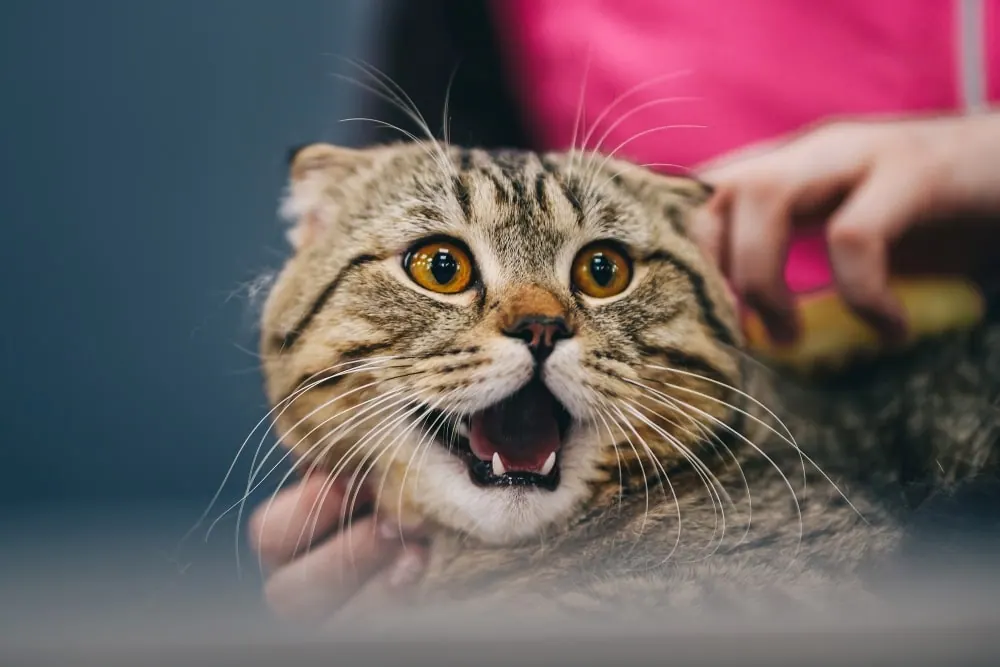
A scared cat is often a biting cat. When confronted with a perceived threat, biting can be a defensive reaction. This can occur during a stressful vet visit, a loud event, or when meeting new people or animals. Understanding the triggers that lead to your cat’s fear can help you mitigate situations that might cause undue stress.
Pain-Induced Biting: A Sign of Distress
Sometimes biting is a symptom of a larger issue, such as pain or discomfort from a medical condition. Cats with dental pain, arthritis, or other health issues might bite when an area affected by these conditions is touched. Regular veterinary check-ups are crucial to diagnose and treat any underlying health issues that could be causing pain-induced biting.
Territorial Biting: The Need for Space
Cats are naturally territorial animals and may bite to protect their space from perceived intruders, whether that’s another pet in the house or even a human. Maintaining a routine and providing a safe, private space for your cat can help alleviate territorial stress.
Affectionate Biting: Love Bites
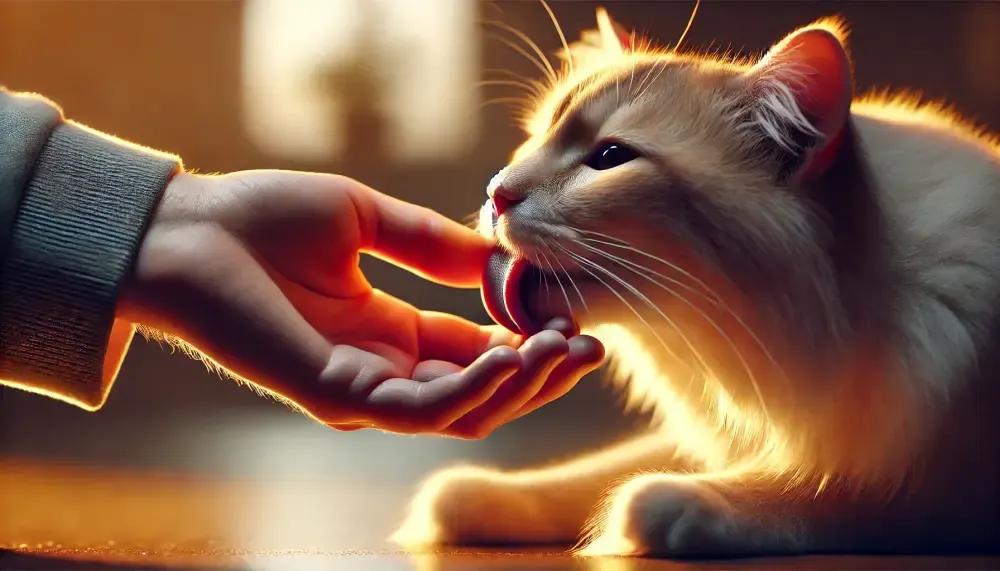
Interestingly, not all bites are aggressive or fearful. Some cats use gentle biting as a way to show affection, known colloquially as ‘love bites.’ This behavior is typically seen when a cat is feeling particularly relaxed or playful. They are more like a soft pinch that does not cause pain.
Communication: Speaking with Their Mouths
Lastly, biting can be a form of communication. Cats use their bodies to express a range of emotions and needs—from hunger or the desire for attention to irritation or even confusion. Paying attention to the circumstances under which your cat bites can provide valuable clues about what they might be trying to tell you.
Summary
Biting is a complex behavior that serves various purposes in the feline world. By understanding the context and triggers for your cat’s biting, you can better respond and prevent these behaviors. Remember to be patient and consistent with your cat as you learn to interpret and react to their unique ways of communication. With time and understanding, the bites can become less frequent, and your bond stronger.
This comprehensive approach to understanding why cats bite, alongside proper training and behavior management, can lead to a more fulfilling and less painful coexistence with your furry friend.