How Much Homemade Dog Food to Feed: Why There Is No Set Cup Amount
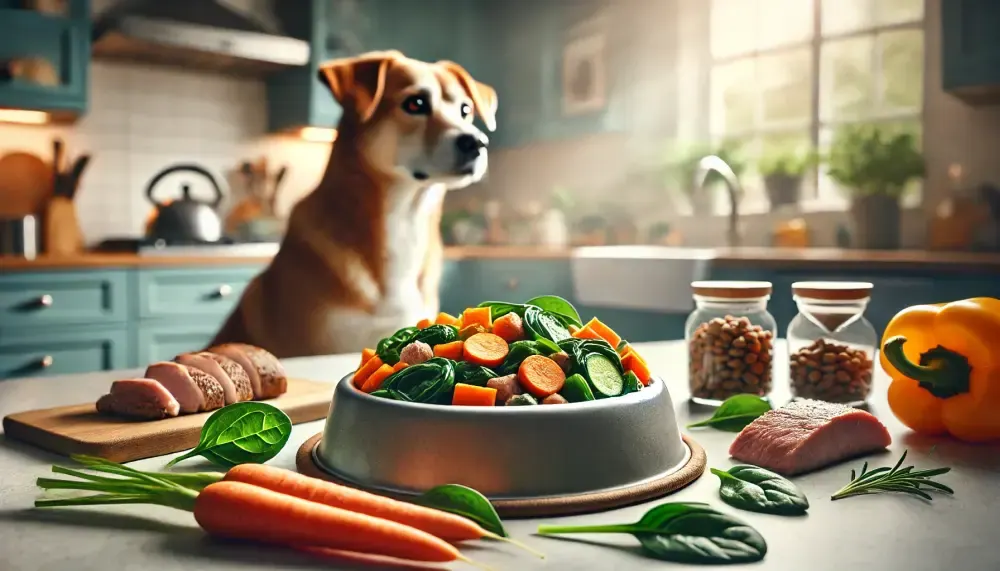
There is no single daily cup amount that works for every homemade dog diet. How much to feed depends on the calories in that specific recipe, and on your dog’s weight, age, body condition, and activity. A chart that says “medium dogs eat 1 to 2 cups” is too rough to use as a feeding plan. Homemade meals are also easy to get wrong: unless a veterinarian or board-certified veterinary nutritionist has formulated the recipe, the diet may be incomplete even if the portions look generous.
A complete homemade diet is easy to get wrong. Use the FDA guidance on complete and balanced pet food, the WSAVA Global Nutrition Guidelines, and the Tufts veterinary nutrition service as your starting references, and work with a veterinarian before treating a home recipe as a full diet.
For a related food question, see Top-Rated Dog Food: There Isn’t One Winner for Every Dog.
For a related food question, see How Much Raw Food to Feed a Dog? There Isn’t One Safe Chart.
If you want a simpler starting point, a complete commercial food with a labeled feeding guide is easier to portion. See top dog food brands or wet vs dry dog food guide if you are choosing a main diet, and use a best dog food toppers only as an extra that still fits the day’s calories.
Why generic cup charts fall short
A cup of a dense meat-and-rice mix does not have the same calories as a cup of a vegetable-heavy mix. Two homemade recipes can look similar in a bowl and differ by hundreds of calories. Weight bands such as “under 20 pounds” also hide big differences between a young active dog and a senior with a slower metabolism.
Online calorie rules of thumb, including calories-per-pound estimates, are only starting guesses. They do not replace a body-condition check or a recipe that has been calculated for completeness.
How to portion a homemade diet safely
If you feed homemade food as the main diet, use a recipe from a veterinary nutritionist, or a well-known veterinary-formulated home-cooking service, and follow that recipe’s own feeding math. Do not mix leftovers and guess. Your veterinarian can help you score body condition (ribs easy to feel but not sharply visible is a common target for many adult dogs) and adjust up or down.
Weigh your dog on a schedule, and change the amount only in small steps. Sudden weight loss, diarrhea, or a dull coat can mean the recipe, not just the portion, is a problem.
When a commercial food is the better tool
A complete, balanced commercial dog food is already formulated to a recognized standard such as AAFCO, and the bag or can includes a feeding starting point. That is often safer than an informal home recipe, especially for puppies, seniors, and dogs with medical conditions. If you still want to cook, ask your veterinarian about using a formulated recipe rather than inventing one.


