Best Self-Cleaning Litter Boxes
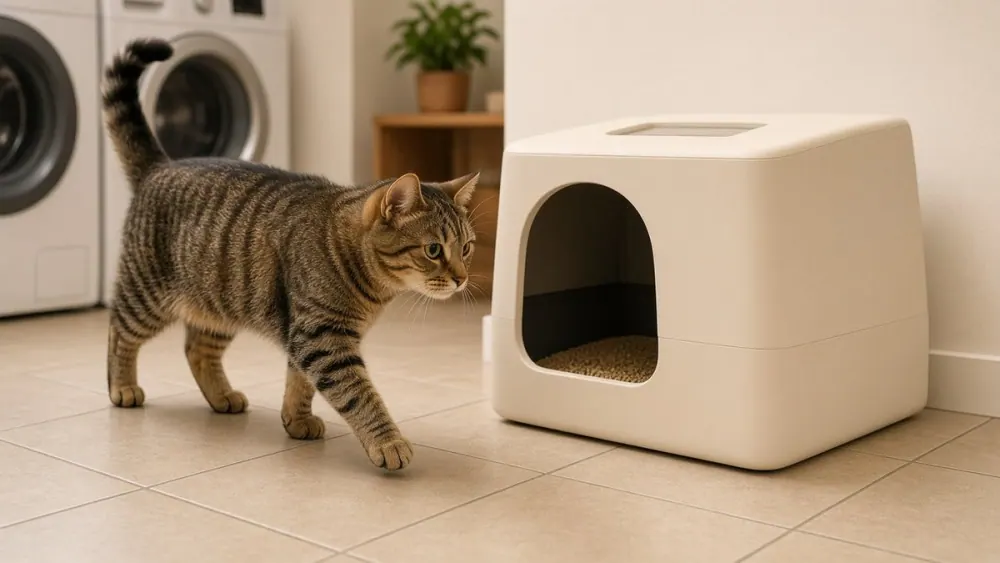
A self-cleaning litter box can cut down on daily scooping. It cannot diagnose a urinary problem, and it is not a reason to ignore a cat that suddenly stops using the box. The Merck Veterinary Manual’s litter box advice is still the baseline: scoop daily in a conventional box, keep the box clean, give cats enough space, and treat soiling outside the box — or straining in the box — as a veterinary issue. The ASPCA’s general cat-care guidance also calls for a quiet, accessible location and at least one box per floor in a multi-level home.
Self-cleaning litter boxes are frequently part of Black Friday and Cyber Monday events. That deals page links to Amazon’s live sale hubs and reminds you to check space, litter type, and whether the cat will actually use the box before you buy on a countdown timer.
This shortlist compares four in-stock boxes that work in different ways: a Litter-Robot 4 bundle with a step and fence, a PETKIT PuraMax 2 rotating box, a PETLIBRO Luma open-top box with a camera, and a PetSafe ScoopFree crystal box that uses disposable trays instead of a rotating globe. We are comparing current listings, not running a multi-cat household trial. For placement, size, and why most homes still need more than one box, see our guide to choosing a cat litter box and our article on finding a litter your cat will actually use.
As an Amazon Associate, we earn from qualifying purchases.
Quick picks
- Best established rotating box: Litter-Robot 4 with step and fence, black — Whisker’s current 4-series bundle on this listing, described as a self-cleaning box for up to four cats. The 4-series is generally listed for cats from about 4 pounds up, with no listed maximum, and it uses clumping clay litter. This bundle includes a step and a fence. Confirm the exact contents on the page before you buy.
- Best compact odor-control box: PETKIT PuraMax 2 — a lower-profile rotating box with app control, a sealed waste bin, and an odor-control system. Listings describe a low entrance, safety sensors, and a weight range that typically tops out around 18 to 22 pounds, depending on the page. Crystal litter is not the right match for this design.
- Best open-top camera box: PETLIBRO Luma automatic litter box — an open-top self-cleaning box with AI camera waste analysis, multi-cat recognition, usage tracking, and safety sensors, according to the listing. Camera features may depend on an app and, for some recording functions, a paid plan. Read the current terms.
- Best crystal-tray alternative: PetSafe ScoopFree Crystal Smart, uncovered — a rake-style box that uses disposable crystal-litter trays instead of clumping clay. The “Smart” model adds app features. This is a different maintenance routine: you replace trays, not a bag of scooped clay.
Comparison table
| Product | Best for | Cleaning style | Litter type (listing) | Good to know |
|---|---|---|---|---|
| Litter-Robot 4 with step and fence | A household that wants the best-known rotating box | Rotating globe, waste drawer | Clumping or scoopable clay | Bundle includes a step and fence; large footprint |
| PETKIT PuraMax 2 | A smaller footprint and odor control | Rotating box, sealed waste bin | Clay, tofu, mixed, bentonite; not crystal | Check the listed weight range for large cats |
| PETLIBRO Luma | An open-top box with a camera | Self-cleaning open-top box | Confirm on the current listing | App and optional paid camera features |
| PetSafe ScoopFree Crystal Smart | People who prefer crystal trays to a globe | Rake plus disposable crystal trays | PetSafe crystal trays | Uncovered; tray replacements are ongoing |
How to choose a self-cleaning litter box
Start with the cat, not the app. An older cat or a large cat may refuse a high or tight entrance. A kitten or a very small cat may be under the minimum weight a sensor can see reliably. Merck’s advice still favors a large box with plenty of room to dig and turn, and it notes that some cats dislike enclosed spaces. An open-top model or a low entrance can matter more than a camera.
Then match the litter. A rotating globe that expects clumping clay will not thank you for crystals, and a ScoopFree tray is not a place to pour regular clumping litter. Budget for bags, filters, trays, or odor cartridges. Finally, keep at least one regular box available while you introduce the machine, and do not hide the only box in a noisy laundry corner. If litter dust or scent is already a household problem, our cat litter allergy guide is a better first read than a new gadget.
1. Best established rotating box: Litter-Robot 4 with step and fence
The Litter-Robot 4 bundle with a step and fence was in stock when we checked. This is Whisker’s 4-series robot, bundled with a step and a fence on this listing. The 4-series is widely listed for multiple cats, with a minimum weight around 4 pounds and no published maximum, and it is designed for clumping or scoopable clay litter. Translucent or crystal litter can interfere with litter-level sensors, according to Whisker’s own compatibility notes.
The step can help a smaller or older cat reach the entrance. The fence is meant to catch litter kick-out. This is still a large, expensive appliance. You will empty a waste drawer, clean the globe, and live with a motor that cycles after the cat leaves. If your cat is already avoiding the box, buy this only after a veterinary exam, not as the first fix.
2. Best compact odor-control box: PETKIT PuraMax 2
The PETKIT PuraMax 2 was in stock when we checked. The listing describes an odor-focused automatic box with a sealed waste bin, a low entrance, an always-open anti-pinch design, safety sensors, app control, and included trash bags and an N50 odor unit. Compatibility is typically listed for clay, tofu, mixed, and bentonite litters, not crystal. Weight guidance on current reviews and listings usually runs from a few pounds up to about 18 or 22 pounds, so a very large cat may find the opening tight.
This is a reasonable pick if you want a smaller rotating box and are willing to use the app. An app full of extra product promotions does not change the cleaning schedule: empty the bin, wipe the sensors, and keep a backup box if one cat refuses this one.
3. Best open-top camera box: PETLIBRO Luma
The PETLIBRO Luma was in stock when we checked. The listing highlights an open-top design, AI camera waste analysis, automatic odor control, multi-cat recognition, usage tracking, and safety sensors. An open top can be a better fit for cats that will not walk into a cave. Camera features, recordings, and “AI” waste alerts may require the app and, for some functions, a paid plan. Those are optional extras, not a medical test.
Read the current listing for litter type, cat weight, and floor requirements. A box that needs a hard floor will not sit well on a deep rug. Do not treat a camera alert as a diagnosis of constipation, diarrhea, or blood in the urine. If the waste looks wrong, call your veterinarian.
4. Best crystal-tray alternative: PetSafe ScoopFree Crystal Smart, uncovered
The ScoopFree Crystal Smart uncovered box was in stock when we checked. Instead of a rotating globe, this design uses a rake and PetSafe’s disposable crystal-litter trays. The Smart model adds app features. Crystal litter controls odor in a different way than clumping clay, and some cats like it less. Tray replacements are a recurring cost.
This can be a simpler mechanical option if you do not want a large rotating drum. It is still not maintenance-free, and an uncovered box will look like a litter box. If your cat already has a litter preference, do not force a crystal change and a new machine at the same time.
When a new box is the wrong first step
A cat that cries in the box, visits often and produces little, or starts peeing on the bed needs a veterinarian, not a firmware update. Introduce any automatic box slowly, keep the old box available, and go back to a simple pan if the cat is frightened by the motor. Clean, location, and enough boxes still matter more than a subscription app.
FAQ
If you take one thing from this guide, let it be this: a self-cleaning box is a labor-saving appliance for a cat that already likes the location, the litter, and the entrance. It is not a treatment for house-soiling, and you should still have a backup box the cat will use.