Clicker Training for Dogs: How It Works and How to Start
We earn from qualifying Amazon purchases. It doesn't change what we recommend.
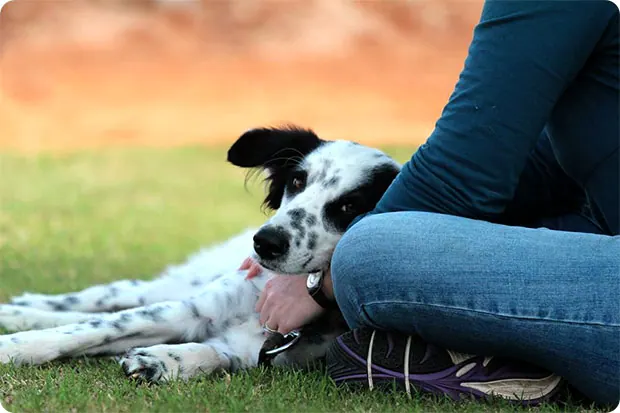
Clicker training is a reward-based method that uses a short, distinct sound, the click, to mark the exact moment a dog does something right. Each click is followed by a treat, so the dog quickly learns that the click means “yes, that earned a reward”. Because the timing is precise, dogs often learn faster and more happily than with corrections, and the method suits shy and sensitive dogs especially well.
How clicker training works
The clicker is a “marker”. Dogs learn that the sound predicts something good, in the same way Pavlov’s dogs learned to expect food. Once your dog makes that connection, you can mark a behavior the instant it happens, even if you can’t hand over a treat at that exact moment. The dog learns which action earned the reward, and repeats it.
A clicker isn’t essential. A short, consistent word such as “yes” can work as a marker too. The clicker’s advantage is that it sounds the same every time and isn’t used in everyday conversation.
The basic rules
- Every click is followed by a reward. Even if you click by mistake, give the treat, or the click loses its meaning.
- Click the behavior, not the dog. Click at the moment the behavior happens, for example the instant your dog’s bottom touches the floor, not a few seconds later.
- No corrections. Don’t pull, push or physically place the dog. If the dog doesn’t do what you want, simply don’t click, and make the next step easier.
- Keep sessions short. A few minutes at a time works best. Stop while your dog is still keen, and skip training on days your dog is tired, stressed or unwell.
- Let your dog be a dog. It’s fine to pause for a sniff or a shake. Training should feel like a game.
How to start: “charging” the clicker
- Pick small, tasty treats. Soft, pea-sized pieces your dog really likes, kept in a pouch or pocket you can reach quickly. Count them as part of your dog’s daily food.
- Click, then treat. In a quiet room, click and immediately give a treat. Don’t ask for anything yet.
- Repeat 10 to 20 times over a few short sessions.
- Check the connection. When your dog’s ears prick up or they look at you for the treat after hearing a click, the clicker is “charged”.
- Add your dog’s name. Say the name, click when your dog looks at you, and treat. This builds attention for everything that follows.
If your dog is startled by the sound, muffle the clicker in a pocket or use a softer-sounding one.
Three ways to get the behavior
Once your dog understands that the click means a treat is coming, you can use the marker in three ways:
- Capturing: wait for something your dog does naturally, such as a sit, a lie-down or a yawn, click the moment it happens, then treat. Useful for behaviors you can’t easily prompt.
- Luring: use a treat at your dog’s nose to guide them into position, for example moving it slightly up and back for a sit. Click when they get there, then fade the lure quickly so your dog doesn’t rely on seeing food.
- Shaping: click small steps toward a new behavior. For example, to teach “go to your bed”, click a glance at the bed, then a step toward it, then a paw on it, and so on. It takes patience, so keep sessions short and the steps small.
In all three, add the cue word only once your dog is doing the behavior reliably. Saying “sit” again and again before the dog understands it just teaches them to ignore the word.
Why it often works better than corrections
When a dog is pushed into position or corrected for getting it wrong, some dogs learn the behavior, but others become fearful, freeze or stop offering behaviors at all. A cue that has become linked with something unpleasant, sometimes called a “poisoned cue”, is hard to fix. Reward-based training avoids that by letting the dog work out what earns a reward. The American Veterinary Society of Animal Behavior recommends reward-based methods over punishment for this reason.
The approach is especially useful for nervous, reactive or sensitive dogs, which tend to shut down when pressured. For dogs with fear or aggression problems, work with a qualified trainer or veterinary behaviorist as well; see how to soothe an aggressive dog.
What you need
- A clicker. They’re small and inexpensive; some come with a wrist strap (check price).
- Small, soft treats your dog loves. See best training treats for dogs.
- A treat pouch so rewards are quick to reach.
Common mistakes
- Clicking late, after the behavior has finished.
- Clicking without treating.
- Using the clicker to get attention, like a remote control. It marks behavior; it doesn’t call the dog.
- Sessions that run too long, or moving on before the dog is ready.
For the wider method, see positive reinforcement training basics and the AKC’s training advice.