Can Dogs Eat Apples?

If you are unsure whether a food is safe, the ASPCA’s list of people foods to avoid feeding pets is a reliable starting point, and a veterinarian or poison-control professional should be called if a pet already ate something questionable.
Dogs are curious creatures and love to investigate new smells and tastes, often leading their owners to wonder if a specific human food is safe for their furry companions. One such food that may pique your dog’s interest is the apple. So, can dogs eat apples? The short answer is yes, dogs can safely enjoy apples in moderation, and these fruits can even provide several health benefits. However, as with any treat, there are important factors to consider before sharing apples with your dog.
Health Benefits of Apples for Dogs
Apples are not only delicious and refreshing, but they also pack several nutritional benefits for dogs. These fruits are rich in essential vitamins and minerals, making them an excellent choice for a healthy treat.
- Vitamins: Apples are loaded with vitamin A and vitamin C, both of which are important for maintaining a dog’s healthy skin, coat, and immune system. Vitamin A supports eye health, while vitamin C acts as an antioxidant that helps reduce inflammation and boost immunity.
- Fiber: The fiber found in apples aids in digestion, promoting regular bowel movements and overall gut health. If your dog has a tendency to suffer from mild digestive issues, such as constipation, a bit of apple can help add fiber to their diet.
- Low in Calories and Fat: Apples are low-calorie snacks, making them a great alternative to high-fat commercial treats. They are also cholesterol-free, which is beneficial for dogs prone to weight gain or obesity.
- Hydration: Apples have high water content, which helps keep your dog hydrated, especially during warmer months. This makes apples a refreshing and healthy snack, particularly after playtime or exercise.
How to Safely Feed Apples to Your Dog
While apples are safe for dogs, there are a few precautions to keep in mind to ensure that your dog can enjoy this snack without any issues.
- Remove the Seeds and Core: Apple seeds contain a small amount of cyanide, which is toxic to dogs if consumed in large quantities. The core can also be a choking hazard, especially for smaller breeds. Always remove the seeds and core before feeding apples to your dog.
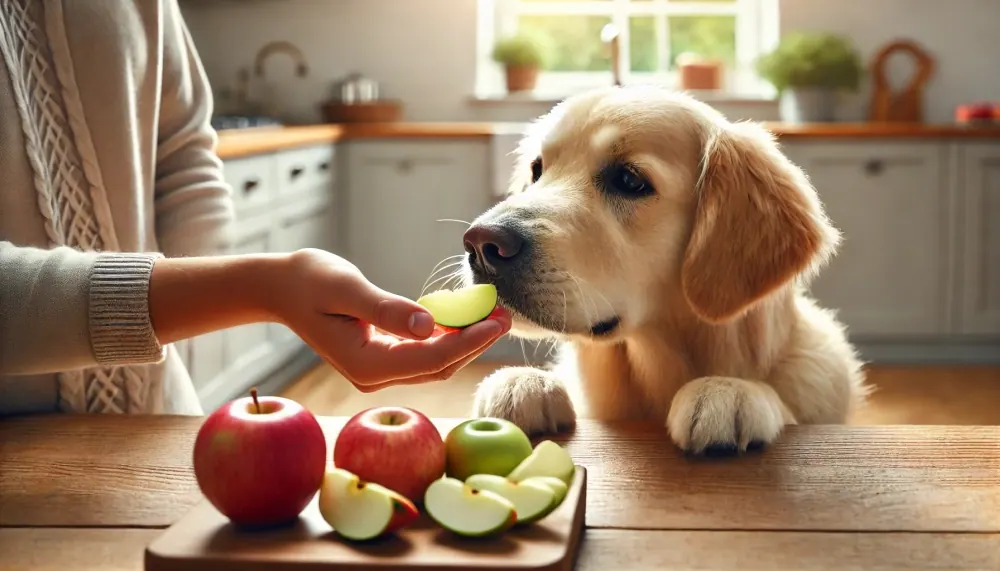
- Serve in Small, Manageable Pieces: To avoid choking or digestive problems, it’s essential to slice the apple into bite-sized pieces. This makes it easier for your dog to chew and digest. Additionally, smaller pieces help control portion size, preventing overconsumption.
- Moderation is Key: Like with any treat, moderation is crucial. Too much apple can lead to digestive upset, such as diarrhea or stomach aches, due to the fruit’s high sugar and fiber content. A few small slices are more than enough for most dogs.
- Introduce Apples Gradually: If your dog has never had apples before, introduce them slowly to observe how your dog’s digestive system reacts. Some dogs may have sensitivities to fruits, and it’s important to monitor them for any adverse reactions, such as vomiting, diarrhea, or allergic reactions.
Potential Risks of Apples for Dogs
Though apples are generally safe for dogs, there are some risks associated with feeding them improperly.
- Apple Seeds and Cyanide: As mentioned, apple seeds contain cyanide, a compound that can be harmful to dogs in large quantities. While it would take many seeds to cause serious harm, it’s best to play it safe and remove them entirely.
- Choking Hazards: The apple core and larger chunks can pose choking risks, particularly for small dogs or those who tend to gulp down their food without chewing. To minimize this risk, always slice the apple into small, easily consumable pieces.
- High Sugar Content: Apples contain natural sugars, which, although not harmful in moderation, can contribute to weight gain and dental issues if overconsumed. Be mindful of your dog’s overall sugar intake, especially if they are prone to obesity or have diabetes.
- Pesticides and Wax Coating: Apples sold in grocery stores are often treated with pesticides and coated with wax to preserve their freshness. To reduce your dog’s exposure to these chemicals, wash the apple thoroughly or peel the skin before serving it to your dog.
When Should You Avoid Feeding Apples to Your Dog?
Although most dogs can safely eat apples, there are certain situations where you should avoid offering this fruit to your dog.
- Digestive Issues: If your dog has a sensitive stomach or is prone to digestive problems, such as diarrhea or gas, it’s best to limit their intake of high-fiber foods like apples. Too much fiber can exacerbate digestive issues.
- Diabetic Dogs: Apples contain sugar, which may affect dogs with diabetes. Consult with your vet before giving your diabetic dog any fruit, including apples, to ensure their diet remains balanced and their blood sugar levels are well-controlled.
- Allergies: In rare cases, some dogs may be allergic to apples. If you notice any signs of an allergic reaction—such as itching, swelling, or difficulty breathing—stop feeding the apples immediately and consult your veterinarian.
Apple-Flavored Treats to Avoid
It’s important to note that while fresh apples are safe for dogs, not all apple-flavored products are suitable. Apple pies, apple-flavored candies, and applesauce often contain added sugars, artificial sweeteners, or other ingredients that can be harmful to dogs. For example, xylitol, a common sweetener in many human foods, is highly toxic to dogs and can cause serious health problems.
When treating your dog to apples, stick to fresh, raw fruit and avoid processed apple products that could contain harmful additives.
Yes, dogs can eat apples, and they can benefit from the vitamins, fiber, and hydration that this nutritious fruit provides. As long as you remove the seeds and core, slice the apple into manageable pieces, and serve it in moderation, apples can make a healthy and delicious treat for your canine companion.
Always keep an eye on your dog’s reaction to new foods and consult your vet if you’re unsure about adding apples or other fruits to their diet. With the proper precautions, apples can become a delightful and refreshing snack that your dog will love!


